“The reality isn’t just the moment on the stage”: Abbey Willcox on the mental toll of chasing the Olympic dream
March 02, 2026
At just five years old, Abbey Willcox understood what the Olympic Games were - and from that moment, she was all in. Like many young athletes, she saw the podium. She didn’t yet see the pain, sacrifice and uncertainty required to get there.
Now 29 and fresh from her Winter Olympic debut, the freestyle aerial skier reflects on a journey that has been far more complex - and far more meaningful - than she ever imagined.
“When I first dreamed of becoming an Olympian at five years old, once I understood what the Olympic Games were, I imagined pure magic. I pictured standing on the biggest stage in the world, wearing my country’s colours, feeling nothing but pride and excitement. As a kid, you don’t see the sacrifices, the setbacks, or the years of quiet grind behind the scenes.”
The years that followed were long and, at times, deeply challenging. “There were so many moments I thought I’d have to give up.” Abbey shares. “Being kicked off the team in 2018, breaking my leg, and missing the 2022 Winter Olympics and losing a teammate who took her own life were devastating at the time.”
Behind the medals and selection lists are real people navigating real struggles. The loss of a teammate to suicide underscored how present - and still often stigmatised - mental ill-health can be in elite sport.
Research conducted by Orygen estimates that around one in three elite athletes will experience anxiety or depression during their career, with rates of psychological distress often higher than those seen in the broader community. The road to elite sport is rarely linear, and the mental health journey alongside it is even less visible.
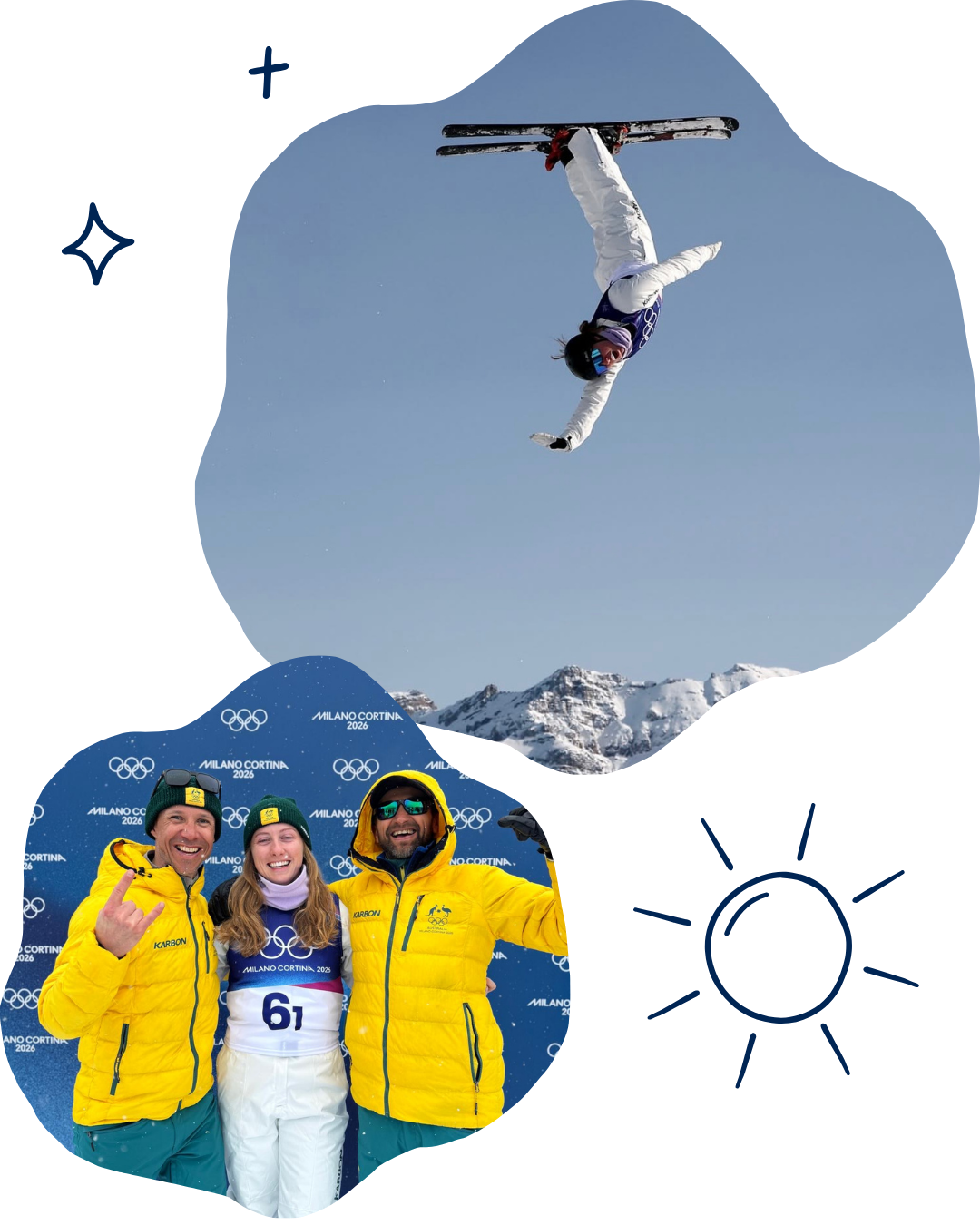
Abbey speaks candidly about that dual impact.
“High performance sport has shaped my mental health in every direction. Positively, it’s given me resilience, discipline, and an incredible sense of purpose. I’ve learned how to sit with discomfort and fear, how to push through barriers, and how to grow through failure.
Negatively, it can be isolating. Your identity can become so wrapped up in performance that when things go wrong - injury, selection setbacks, missing major events - it can feel like your whole world collapses. The pressure to always be ‘on’ can be exhausting. There were times when the weight of expectation and setbacks really tested me.”
Over time, her perspective shifted.
“The biggest shift came when I realised mental health needed the same attention as physical recovery. Once I treated it that way, everything changed.”

Chasing something as significant as the Olympics brings layered pressure - and much of it is internal.
“The pressure is layered. There’s external pressure - selectors, teammates, public expectations. There’s the pressure of time, knowing opportunities don’t come around often. And then there’s the internal pressure, which is usually the loudest: the expectations you place on yourself. When you’ve dreamt of something since you were five, it’s not ‘just another competition.’ It feels like your life’s mission. That can be motivating, but it can also feel suffocating if you don’t manage it properly.”
Elite sport exists in duality: pride and pressure, achievement and anxiety, purpose and fear.
“People see the highlights. They don’t see the years of uncertainty. They don’t see getting cut from a team, sitting alone after finding out you’ve missed selection, or learning how to walk again after a broken leg. They don’t see the identity struggles, the fear of ‘Who am I if this doesn’t work out?’ They don’t see the financial pressures, the sacrifices in relationships, or the mental toll of constant evaluation. Elite sport is beautiful, but it’s also brutal. Both can exist at the same time.”
Protecting her wellbeing has meant separating performance from identity. Alongside her sporting career, Abbey works full-time with the Brisbane Broncos - something she credits as a key protective factor for her mental health.
“It gives me perspective and reminds me I’m more than just an athlete. When I step into work, I’m contributing in a completely different way. It separates performance from identity. I’ve learned that sport is something I do - it’s not who I am. I’m a teammate, a colleague, a partner, a friend, a family member. When performance dips, those parts of me are still solid. That separation has protected my mental health more than anything else.”
Over the course of her career, Abbey has seen meaningful progress in how mental health is discussed in elite environments - but she’s clear there’s more work to do.
“When I started, the conversation around mental health was almost non-existent. You were expected to be tough, resilient, and quiet about struggles. Now, there’s much more openness, although there is still room to improve. Athletes are speaking up. Support systems are stronger. There’s an understanding that mental health isn’t weakness, it’s part of performance. I’ve learned that vulnerability is actually strength.”
For young athletes chasing big dreams, her advice is grounded and compassionate.
“Your dream is allowed to be big, but it shouldn’t cost you yourself. Pressure feels overwhelming when you think you have to carry it alone. Focus on the next small step, not the entire mountain. Build a life outside your dream so that your identity isn’t fragile. And understand that setbacks don’t mean you’re done, sometimes they’re shaping you into someone stronger than you would have been otherwise.
Adversity doesn’t disqualify you. If anything, once you face it, heal from it, and grow through it, it can become your edge. And most importantly: your worth isn’t defined by whether you make it to the Olympic Games. It’s defined by who you become in the pursuit of it.”
If you or someone you know is experiencing a mental health crisis and is in immediate danger of harming themselves or others, call 000. You can find a comprehensive list of mental health support services here.