LewChing's Story | World Mental Health Day
October 08, 2024
When it comes to mental health, meaningful connections matter.
This includes connections with loved ones, connections with community, connections with colleagues, connections to supports and services, connections to Country – and connections to yourself.
For World Mental Health Day on 10 October, batyr has partnered with Mental Health Australia to share how meaningful connections have supported four of our lived experience storytellers on the path to good mental health.
LewChing's Story
I arrived in Australia in 2017 after fleeing family violence at 19 years old. Despite having meticulously planned my escape from the age of 15, I had little understanding of all that I had ran away from.
"Where I grew up, mental health was not spoken about, and any mention of mental illness was shoved under the rug.I held my façade for the most part, only breaking down in front of my mother for the first time at aged seventeen and another time in front of my teacher. I was simply told to get over it"
After getting the fresh start I had fought hard for in Australia, I remained plagued by the stigma I grew accustomed to and was too scared to seek help.
It was only until things reached a breaking point when I became the victim-survivor of an assault that forced me to seek help. I had only intended to speak about the assault, but it opened the floodgates to everything I had kept to myself until that moment. I was eventually diagnosed with complex PTSD, depression, and anxiety.
The diagnosis made me realise it was not (as I was so often told) just in my head and I began to build self-compassion. Over the next few years, I started to unpack of my trauma and rebuild my support networks.
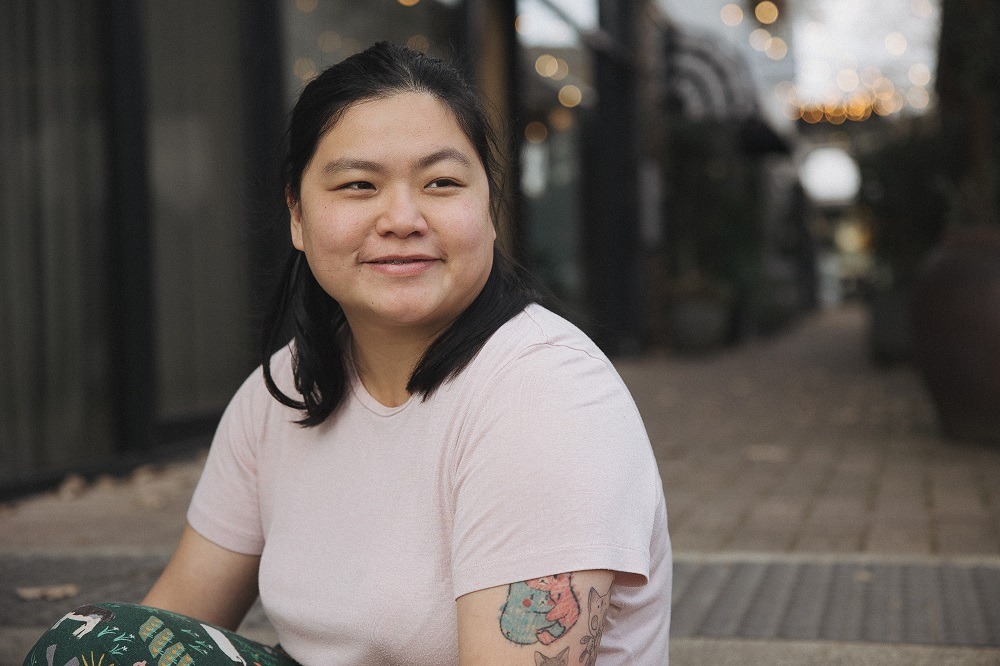
Photo by Thorson Photography.
For me, a key part of my healing journey is being able to utilise my lived and living experiences to drive systemic reforms to allow better, more accessible supports for my communities. It has allowed me to reclaim parts of my story and find solidarity.
It has taken a long time for me to build a chosen family for myself here and to re-learn how to place my trust in others to support me through the bad days.
If you have met me or done a virtual meeting with me, you will probably have caught a glimpse of my black cat Spike. Despite his daily antics, he has quickly become a strong emotional support for my mental health. I still get bad days and relapses, and that’s okay. It’s not a linear journey.
If you or someone you know is experiencing a mental health crisis and is in immediate danger of harming themselves or others, call 000. You can find a comprehensive list of mental health support services here.